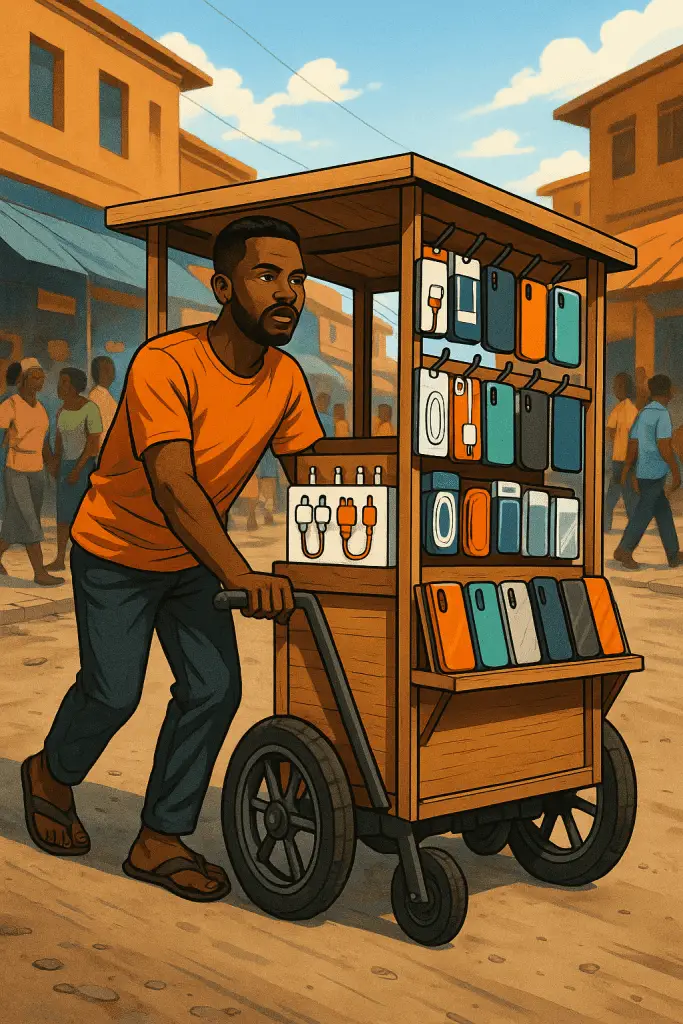
If you’ve been buying phone accessories from local wholesalers in Ghana, you’ve probably wondered whether importing directly from China could help you reduce costs and increase your profits.
The answer is yes—but only if you understand the process.
China is the world’s largest manufacturing hub for phone accessories, producing everything from charging cables and fast chargers to power banks, phone cases, tempered glass, wireless earbuds, and smart watches. Many of the accessories sold in Ghana’s wholesale markets originally come from Chinese manufacturers before being imported by distributors and wholesalers.
By learning how to import phone accessories from China to Ghana, you may be able to access a wider product selection, negotiate better prices, and build a stronger competitive advantage. However, importing also involves important considerations such as finding trustworthy suppliers, understanding minimum order quantities (MOQs), choosing the right shipping method, calculating import costs, and complying with Ghana’s customs procedures.
For beginners, importing can seem overwhelming. Questions about supplier verification, payment security, shipping, freight forwarding, and customs clearance often discourage aspiring entrepreneurs from taking the next step.
That’s exactly why this guide was created.
In this comprehensive article, you’ll learn how the import process works, where to find reliable Chinese suppliers, how to avoid common mistakes, estimate your total costs, and decide whether importing is the right choice for your business.
If you’re still building your foundation, it’s also worth reading our complete guide to the phone accessories wholesale business in Ghana, where we explain how sourcing, inventory management, and wholesale operations fit together to create a profitable business.
Whether you’re planning your first import or looking for ways to improve your existing sourcing strategy, this step-by-step guide will help you make more informed decisions and build a sustainable phone accessories business in Ghana.
Why Most Phone Accessories in Ghana Come from China
Walk into almost any phone accessories shop in Ghana, and you’ll find shelves stocked with charging cables, fast chargers, phone cases, tempered glass, power banks, wireless earbuds, Bluetooth speakers, and smart watches. While these products are sold by local retailers and wholesalers, many of them share one thing in common—they were manufactured in China.
China has become the world’s leading producer of consumer electronics and mobile accessories because of its large manufacturing capacity, advanced production technology, and well-established supply chains. From affordable everyday accessories to premium products, Chinese factories supply businesses in countries across Africa, Europe, Asia, and the Americas.
For entrepreneurs in Ghana, this means that many local wholesalers are sourcing their inventory from China before reselling it within the country. By understanding this supply chain, you can decide whether it makes sense to continue buying locally or eventually import directly.
Why China Dominates the Phone Accessories Industry
China’s position as the world’s leading manufacturing hub didn’t happen by accident. Several factors have made it the preferred sourcing destination for phone accessories businesses.
Large Manufacturing Capacity
Thousands of factories specialize in producing mobile accessories, allowing businesses to source almost any product they need—from simple charging cables to advanced wireless devices.
Because production happens on such a large scale, manufacturers can often offer competitive prices for bulk orders.
Wide Product Selection
One of the biggest advantages of sourcing from China is the enormous variety of products available.
You can find:
- phone cases
- tempered glass
- charging cables
- fast chargers
- power banks
- wireless earbuds
- Bluetooth speakers
- smart watches
- car phone holders
- wireless chargers
- selfie sticks
- phone stands
- gaming accessories
This wide selection allows retailers to meet different customer needs while expanding their product range.
Competitive Pricing
Large-scale manufacturing helps reduce production costs.
As a result, businesses importing directly from China can often purchase products at lower prices than buying from local wholesalers.
However, it’s important to calculate the total landed cost, including shipping, customs duties, taxes, and other import expenses—not just the factory price.
Continuous Innovation
The mobile accessories market changes rapidly as new smartphones are released.
Chinese manufacturers frequently introduce:
- updated product designs
- improved charging technology
- new colors and styles
- accessories for newly launched smartphones
Importers who monitor these trends can often introduce new products to the Ghanaian market sooner.
Does “Made in China” Mean Low Quality?
This is one of the biggest misconceptions among new importers.
The phrase “Made in China” does not automatically mean a product is low quality.
China manufactures products across a wide range of quality levels.
For example:
- budget products
- mid-range products
- premium products
- OEM products
- private-label products
The quality depends largely on which manufacturer you choose and the specifications you request—not simply the country of manufacture.
This is why selecting reliable suppliers is far more important than focusing only on price.
Why Many Ghanaian Businesses Still Buy from Local Wholesalers
Although importing directly can reduce the cost per unit, many businesses continue buying from wholesalers in Ghana because it offers several practical advantages.
These include:
- lower startup capital
- smaller order quantities
- faster delivery
- easier product inspection
- no need to manage international shipping or customs clearance
For many beginners, purchasing locally is the most practical way to learn the business before moving into direct importing.
When Does Importing Become Worthwhile?
Direct importing generally becomes more attractive when your business:
- has consistent monthly sales
- understands customer demand
- can afford larger inventory purchases
- wants higher profit margins
- plans to build a long-term brand
At this stage, importing selected fast-moving products directly from China can improve profitability and provide greater control over your inventory.
Before deciding whether to import directly, it’s worth understanding Phone Accessories Business Profit Margin in Ghana. Comparing both options will help you determine which sourcing strategy best suits your business at its current stage.
Key Takeaway
Most phone accessories sold in Ghana originate from manufacturers in China because of the country’s massive production capacity, competitive pricing, and extensive product selection. While buying directly from China can offer significant advantages, success depends on choosing reliable suppliers, understanding import costs, and developing a sourcing strategy that matches your business goals.
For many entrepreneurs, the best approach is to start by learning the local market, then transition to direct importing as the business grows.
Can Beginners Import Phone Accessories from China?
One of the most common questions aspiring entrepreneurs ask is:
“Can I import phone accessories from China even if I’ve never imported anything before?”
The simple answer is yes.
Many successful phone accessories businesses in Ghana started with little or no importing experience. What made the difference wasn’t years of experience—it was taking the time to understand the process, working with reliable suppliers, and avoiding common beginner mistakes.
That said, importing is a business skill. Like any skill, it becomes easier as you gain knowledge and practical experience.
You Don’t Need to Be an Import Expert
A common misconception is that importing is only for large companies with millions of cedis to invest.
In reality, many small business owners begin by importing a limited range of products and gradually expand as their businesses grow.
You don’t need to know everything before placing your first order, but you should understand the basics, including:
- how to find trustworthy suppliers
- how to compare product quality
- how payments work
- how shipping is arranged
- how customs clearance works in Ghana
- how to calculate your total import costs
Learning these fundamentals will help you make informed decisions and reduce unnecessary risks.
Start Small Instead of Importing Everything
One of the biggest mistakes beginners make is placing a very large first order because they want to maximize profits.
A better approach is to start with a small selection of products that already have strong demand.
For example, you might begin with:
- charging cables
- fast chargers
- tempered glass
- phone cases
- power banks
A smaller first shipment allows you to:
- test product quality
- understand the import process
- measure customer demand
- improve your confidence before scaling up
Think of your first import as a learning experience as well as a business investment.
Build Experience Before Increasing Your Orders
Once you’ve completed one successful import, the next order becomes much easier.
You’ll gain experience with:
- communicating with suppliers
- making international payments
- arranging shipping
- clearing goods through customs
- calculating your profit margins
Over time, you’ll be able to negotiate better prices and make more informed purchasing decisions.
Capital Still Matters
Although beginners can import successfully, it’s important to work within your budget.
Avoid borrowing large sums of money for your first shipment unless you have a solid business plan and understand the risks.
Instead:
- start with affordable inventory
- focus on fast-moving products
- reinvest your profits into larger orders
Growing gradually is often safer than trying to expand too quickly.
Learn Before You Buy
Before placing any order, spend time researching:
- supplier reputation
- product quality
- shipping options
- import costs
- customs procedures
The more you learn before buying, the fewer mistakes you’re likely to make.
Preparation is one of the best investments you can make.
Should You Import Directly or Use an Import Agent?
Many beginners choose to work with a freight forwarder or import agent for their first shipment.
These professionals can assist with:
- shipping arrangements
- customs documentation
- cargo tracking
- import logistics
Although this adds to your costs, it can make the first import much less stressful and help you avoid expensive errors.
As your experience grows, you can decide whether to continue using an agent or manage more of the process yourself.
Common Beginner Mistakes
Avoid these common mistakes when importing for the first time:
❌ Choosing suppliers based only on the lowest price.
❌ Ordering large quantities without testing samples.
❌ Ignoring shipping and customs costs.
❌ Failing to calculate total landed cost.
❌ Importing products that have little demand.
❌ Not verifying the supplier’s credibility.
Learning from these mistakes can save you significant time and money.
Before placing your first order, it’s a good idea to learn about How to Buy Phone Accessories in Bulk Without Losing Money so you can focus your investment on products that customers already want to buy.
Key Takeaway
Yes, beginners can successfully import phone accessories from China to Ghana. The key is to start with a manageable order, work with reliable suppliers, understand your costs, and learn the import process step by step.
Instead of trying to import everything at once, focus on building experience with smaller shipments. As your confidence, knowledge, and sales grow, you’ll be in a much stronger position to scale your imports and increase your profitability.
Best Websites to Buy Phone Accessories from China
Once you’ve decided to import phone accessories from China, the next question is usually:
“Where do I find reliable suppliers?”
Fortunately, several well-established online marketplaces connect international buyers with Chinese manufacturers, wholesalers, and trading companies. However, each platform serves a different purpose, and understanding those differences will help you choose the right supplier for your business.
Below are some of the best websites to source phone accessories from China.
1. Alibaba
Alibaba is one of the world’s largest business-to-business (B2B) marketplaces and one of the most popular platforms for importing products from China.
It connects buyers with thousands of manufacturers and wholesalers offering products such as:
- phone cases
- charging cables
- fast chargers
- power banks
- tempered glass
- wireless earbuds
- Bluetooth speakers
- smart watches
Advantages
✅ Large selection of verified suppliers
✅ Supports bulk orders
✅ Trade Assurance helps protect eligible transactions
✅ Easy communication with suppliers
✅ Suitable for private labeling and custom branding
Disadvantages
❌ Many suppliers have minimum order quantities (MOQs)
❌ Prices may vary between suppliers
Best For
Businesses planning to import wholesale quantities.
2. 1688
1688 is one of China’s largest domestic wholesale marketplaces.
Many products sold on international platforms are first listed here at lower prices because the platform mainly serves the Chinese market.
Advantages
✅ Very competitive prices
✅ Huge product selection
✅ Excellent for bulk purchasing
Disadvantages
❌ Website is primarily in Chinese
❌ Many suppliers communicate mainly in Chinese
❌ International shipping usually requires a freight forwarder or sourcing agent
Best For
Experienced importers or beginners working with a trusted sourcing agent.
3. Made-in-China
Made-in-China is another well-known B2B sourcing platform that connects international buyers with Chinese manufacturers.
It focuses on verified manufacturers across many industries, including consumer electronics and phone accessories.
Advantages
✅ Manufacturer-focused platform
✅ Detailed supplier profiles
✅ Wide variety of products
Disadvantages
❌ Some suppliers have higher MOQs
❌ Product pricing varies significantly
Best For
Businesses seeking long-term manufacturing partners.
4. AliExpress
Unlike Alibaba, AliExpress is designed for smaller purchases.
Many sellers allow buyers to purchase individual items or small quantities.
Advantages
✅ Low minimum order quantities
✅ Suitable for testing products
✅ Easy ordering process
Disadvantages
❌ Higher prices than wholesale platforms
❌ Not ideal for large-scale importing
Best For
Beginners testing products before placing bulk orders.
Which Platform Should Beginners Use?
If you’re importing for the first time:
- AliExpress is useful for testing products in small quantities.
- Alibaba is often the best choice once you’re ready to buy wholesale.
- 1688 becomes attractive when you have a reliable sourcing agent or freight forwarder.
- Made-in-China is a good option for finding manufacturers and comparing suppliers.
The right platform depends on your experience, budget, and business goals.
Don’t Choose a Supplier Based Only on Price
A common mistake is selecting the cheapest supplier without evaluating other important factors.
Before placing an order, check:
- supplier reviews
- years in business
- response time
- product photos
- certifications (where applicable)
- customer feedback
- order history
A supplier with slightly higher prices but a proven track record may save you money in the long run.
Request Product Samples
Before placing a large wholesale order, ask for product samples whenever possible.
Testing samples allows you to evaluate:
- build quality
- packaging
- charging performance
- durability
- compatibility
This reduces the risk of importing products that don’t meet your expectations.
Compare Multiple Suppliers
Avoid making a decision after speaking with only one supplier.
Instead:
- Request quotations from several suppliers
- compare prices
- evaluate communication
- review shipping options
- assess product quality
Comparing multiple suppliers improves your chances of finding the best long-term partner.
Key Takeaway
There is no single “best” website for importing phone accessories from China. The ideal platform depends on your experience and business needs. Alibaba is an excellent choice for most wholesale buyers, 1688 offers highly competitive domestic pricing, Made-in-China connects buyers with manufacturers, and AliExpress is ideal for testing products in smaller quantities.
Whichever platform you choose, focus on supplier reliability, product quality, and clear communication—not just the lowest price. Building relationships with trustworthy suppliers is one of the most important steps toward creating a successful phone accessories business in Ghana.
How to Find Reliable Phone Accessories Suppliers in China
Finding suppliers is easy. Finding reliable suppliers is what protects your investment and helps you build a successful phone accessories business.
Thousands of companies in China manufacture and export phone accessories, but not all of them offer the same product quality, customer service, or business practices. Taking time to verify a supplier before placing an order can save you from costly mistakes, delayed shipments, and poor-quality products.
Here are the most important steps to help you identify trustworthy Chinese suppliers.
1. Choose Established Suppliers
When searching on wholesale platforms, you’ll often find hundreds of suppliers selling similar products.
Instead of contacting every supplier, focus on businesses that have:
- several years of operating history
- complete company profiles
- detailed product listings
- professional communication
- experience exporting internationally
Established suppliers are generally more reliable because they have a track record of serving customers.
2. Verify the Company’s Business Information
Before sending any payment, review the supplier’s business profile carefully.
Look for information such as:
- company name
- business registration
- factory or trading company status
- years in operation
- export experience
A transparent supplier is usually willing to provide business information when requested.
3. Evaluate Product Quality
Never assume that all suppliers offer the same quality.
Ask for:
- detailed product photos
- product specifications
- videos showing the products
- quality certifications where applicable
Whenever possible, order samples before placing a large wholesale order.
Testing products yourself is one of the best ways to avoid future problems.
4. Communicate with the Supplier
Good communication is often a sign of a professional business.
Pay attention to whether the supplier:
- answers your questions clearly
- responds promptly
- explains product details
- provides accurate quotations
- discusses shipping options professionally
Poor communication at the beginning can lead to bigger problems later.
5. Compare Multiple Suppliers
Avoid placing an order after speaking with only one supplier.
Instead:
- request quotations from several companies
- compare prices
- evaluate product quality
- compare shipping options
- assess customer service
A careful comparison helps you make a more informed decision.
6. Understand Minimum Order Quantities (MOQs)
Different suppliers have different MOQs.
Before negotiating, ask:
- What is your minimum order quantity?
- Can you accept a smaller trial order?
- Do prices change for larger orders?
Some suppliers are flexible, especially if they believe you could become a long-term customer.
7. Request Product Samples
A sample order allows you to inspect:
- build quality
- packaging
- durability
- charging performance
- overall finish
Although sample orders cost money, they are much cheaper than importing hundreds of defective products.
8. Ask About Manufacturing and Delivery Times
Understanding production schedules helps you plan your inventory.
Questions to ask include:
- How long does production take?
- How soon can the order be shipped?
- What happens if production is delayed?
Reliable suppliers provide realistic delivery estimates instead of making promises they cannot keep.
9. Understand Payment Terms
Before making any payment, confirm:
- accepted payment methods
- payment schedule
- deposit requirements
- balance payment timing
Avoid rushing into payments before you’re comfortable with the supplier’s credibility.
10. Build a Long-Term Relationship
Once you’ve found a dependable supplier, focus on building trust.
Professional relationships often lead to:
- better wholesale prices
- priority production
- faster communication
- access to new products
- improved business support
Many successful importers work with the same suppliers for years.
Warning Signs to Watch For
Be cautious if a supplier:
❌ refuses to answer basic questions
❌ provides inconsistent information
❌ pressures you to make immediate payments
❌ cannot provide product samples
❌ constantly changes prices without explanation
❌ avoids discussing delivery timelines
These warning signs don’t always indicate fraud, but they should encourage you to investigate further before placing an order.
Supplier Verification Checklist
Before placing your first wholesale order, ask yourself:
✅ Have I compared multiple suppliers?
✅ Have I reviewed the company’s business information?
✅ Have I tested product samples?
✅ Do I understand the payment terms?
✅ Has the supplier communicated professionally?
✅ Am I comfortable with the delivery timeline?
If you can answer “yes” to these questions, you’re in a much stronger position to move forward confidently.
Key Takeaway
Finding a reliable phone accessories supplier in China requires more than comparing prices. By verifying business information, testing product samples, communicating professionally, and comparing multiple suppliers, you can reduce risks and build long-term partnerships that support your business growth.
A trustworthy supplier isn’t just someone who sells products—they’re a partner who helps your business succeed over the long term.
How to Choose the Right Phone Accessories to Import
Importing directly from China can increase your profit margins, but choosing the wrong products can leave you with slow-moving inventory and tied-up capital. That’s why selecting the right phone accessories is just as important as finding a reliable supplier.
Instead of importing everything at once, focus on products that have consistent demand, healthy profit margins, and broad compatibility with popular smartphone brands in Ghana.
Here’s how to choose wisely.
1. Prioritize Fast-Moving Products
Your first shipment should focus on accessories that customers buy regularly.
Some of the most consistently demanded products include:
- charging cables
- fast chargers
- phone cases
- tempered glass
- power banks
- wireless earbuds
- car phone holders
These products are purchased frequently because they wear out, get lost, or are needed when customers buy new phones.
For a detailed breakdown of high-demand products, read our guide on fast-moving phone accessories in Ghana.
2. Research the Ghanaian Market
Don’t import products simply because they’re popular in another country.
Instead, ask:
- Which smartphone brands are most common in Ghana?
- What accessories do customers request most often?
- Which products sell quickly in local phone shops?
Talk to retailers, observe customer buying habits, and monitor trends before placing large orders.
3. Focus on Products with Healthy Profit Margins
Some accessories generate much higher profits than others.
When choosing products, compare:
- wholesale cost
- shipping cost
- expected selling price
- competition
- customer demand
Sometimes a product with a slightly higher purchase price can produce greater overall profit because customers are willing to pay more for quality.
4. Start with Universal Accessories
Universal products reduce the risk of unsold inventory.
Examples include:
- USB-C charging cables
- multi-port chargers
- wireless earbuds
- power banks
- Bluetooth speakers
- phone holders
These accessories are compatible with a wide range of smartphones, giving you a larger customer base.
5. Avoid Buying Too Many Models Initially
New importers sometimes order dozens of different products in small quantities.
This makes inventory management difficult.
Instead:
- choose a few proven products
- monitor sales performance
- expand gradually based on customer demand
A focused inventory is easier to manage and often more profitable.
6. Consider Product Quality
Customers remember quality.
A cheap accessory that fails quickly may generate complaints, refunds, and negative word-of-mouth.
Before importing, request samples and evaluate:
- durability
- packaging
- charging speed
- finish
- compatibility
High-quality products help build customer trust and encourage repeat purchases.
7. Watch Smartphone Trends
Whenever a major smartphone brand launches a new model, demand often increases for compatible:
- phone cases
- screen protectors
- chargers
- camera lens protectors
Keeping up with smartphone trends allows you to stock products before demand peaks.
8. Balance Budget and Premium Products
Not every customer has the same budget.
A balanced inventory might include:
Budget Range
- basic charging cables
- standard phone cases
- entry-level earbuds
Mid-Range
- reinforced charging cables
- fast chargers
- premium tempered glass
Premium
- branded power banks
- high-speed charging accessories
- premium wireless earbuds
Offering different price points helps you serve a wider range of customers.
9. Think About Storage and Shipping
Some accessories are lightweight and inexpensive to ship, while others occupy more space and cost more to transport.
For beginners, compact products such as:
- charging cables
- tempered glass
- phone cases
are often easier and more affordable to import than bulky electronics.
10. Test Before Scaling
Before importing large quantities, monitor:
- customer feedback
- repeat purchases
- warranty claims
- profit margins
- stock turnover
Use this information to decide which products deserve larger future orders.
Successful businesses grow by expanding products that have already proven themselves.
Product Selection Checklist
Before importing any accessory, ask yourself:
✅ Is there strong demand in Ghana?
✅ Will it generate a healthy profit?
✅ Is the product reliable?
✅ Does it fit my budget?
✅ Can I sell it quickly?
If the answer is “yes” to most of these questions, the product is likely worth considering.
After deciding which accessories to import, you’ll also need to understand how to price them for maximum profit while remaining competitive in the Ghanaian market.
External Resource
For insights into global trade and product sourcing strategies, the International Trade Centre publishes practical guidance that can help importers make informed purchasing decisions.
Key Takeaway
Choosing the right phone accessories to import is about more than finding low prices. Focus on products with proven demand, good quality, healthy profit margins, and broad compatibility. Start with a manageable product range, test the market, and use real sales data to guide future imports.
By making informed product choices, you’ll reduce business risk, improve cash flow, and build a stronger, more profitable phone accessories business in Ghana.
Understanding Minimum Order Quantities (MOQ)
One of the first terms you’ll encounter when importing phone accessories from China is MOQ, which stands for Minimum Order Quantity.
If you’re new to importing, an MOQ may seem frustrating at first. You might only want to buy 20 charging cables, but the supplier requires a minimum order of 200 pieces.
Don’t worry—this is completely normal in international trade.
Understanding how MOQs work will help you negotiate better, manage your budget wisely, and avoid buying more inventory than your business needs.
What Is a Minimum Order Quantity (MOQ)?
A Minimum Order Quantity (MOQ) is the smallest number of units a supplier is willing to sell in a single order.
For example:
- Charging cable: MOQ – 200 pieces
- Phone case: MOQ – 100 pieces
- Power bank: MOQ – 50 pieces
The exact MOQ varies depending on the product, manufacturer, and supplier.
Some suppliers also set a minimum order value instead of a minimum number of units.
For example:
- Minimum order value: US$500
This means you can combine different products as long as your total purchase reaches the required amount.
Why Do Chinese Suppliers Have MOQs?
Manufacturers set MOQs for several practical reasons.
These include:
- reducing production costs
- improving manufacturing efficiency
- minimizing packaging expenses
- making shipping more economical
- ensuring each order is profitable
Factories are designed for large-scale production, so processing very small orders may not be cost-effective.
Do All Suppliers Have the Same MOQ?
No.
MOQs vary significantly between suppliers.
Factors that influence MOQ include:
- product type
- manufacturing process
- supplier size
- customization requirements
- packaging options
This is why comparing multiple suppliers is important before making a decision.
Can Beginners Negotiate the MOQ?
Yes—in many cases.
While some manufacturers have fixed MOQs, others may accept smaller trial orders, especially if they believe you could become a long-term customer.
When contacting a supplier, you can politely ask:
- Can you reduce the MOQ for a first order?
- Do you accept trial orders?
- Can I combine different products to meet the MOQ?
Professional and respectful communication often leads to more flexible arrangements.
Ways to Manage High MOQs
If a supplier’s MOQ is higher than your budget allows, consider these options.
1. Start with Fewer Product Types
Instead of importing 20 different accessories, focus on a few fast-moving products.
This allows you to meet the supplier’s MOQ while keeping your inventory manageable.
2. Combine Different Variants
Some suppliers allow you to mix:
- colours
- phone models
- product designs
For example, you may be able to order:
- 50 black phone cases
- 50 blue phone cases
- 50 red phone cases
- 50 transparent phone cases
This helps you offer variety without increasing the total quantity.
Always confirm this option with the supplier before placing your order.
3. Work with a Trading Company
Some trading companies purchase from multiple factories and can combine products into one shipment.
This may allow you to buy smaller quantities than ordering directly from a manufacturer.
Keep in mind that prices may be slightly higher than buying directly from a factory.
4. Increase Your Order Gradually
Don’t feel pressured to meet very large MOQs immediately.
Many successful importers begin with:
- one shipment
- a limited product range
- manageable inventory
As sales increase, they place larger orders to qualify for better pricing.
Should You Always Choose the Lowest MOQ?
Not necessarily.
A low MOQ is helpful, but it shouldn’t be your only consideration.
Also evaluate:
- product quality
- supplier reputation
- communication
- shipping options
- warranty policies
A slightly higher MOQ from a dependable supplier is often a better long-term investment than a very low MOQ from an unreliable one.
Questions to Ask About MOQs
Before placing an order, ask your supplier:
- What is your MOQ?
- Can I place a smaller trial order?
- Can I combine different products or colours?
- Does the MOQ change for repeat customers?
- Do larger orders qualify for better prices?
These questions can help you negotiate more effectively.
Understanding MOQs is only one part of importing successfully. It’s equally important to know how to negotiate better wholesale prices so you can maximize your profit margins as your order sizes increase.
Key Takeaway
Minimum Order Quantities are a standard part of importing from China. Rather than seeing them as an obstacle, treat them as something you can plan for and, in some cases, negotiate.
By starting with fast-moving products, comparing suppliers, requesting trial orders, and growing your purchases gradually, you can manage MOQs effectively while reducing financial risk and building a stronger phone accessories business.
Payment Methods for Chinese Suppliers
After choosing a reliable supplier and agreeing on the products you want to import, the next step is making payment. This is often where first-time importers feel most nervous, especially when sending money to a supplier in another country.
The good news is that many reputable Chinese suppliers offer secure payment options. By understanding how each payment method works and taking a few precautions, you can reduce risks and complete your transactions with confidence.
Let’s look at the most common payment methods used when importing phone accessories from China to Ghana.
1. Alibaba Trade Assurance
If you’re buying through Alibaba, one of the safest payment options is Trade Assurance.
This service helps protect eligible orders by holding your payment until the supplier meets the agreed terms for quality and shipping.
Advantages
- Secure payment process
- Protection against certain order disputes
- Easy to track transactions
- Suitable for beginners
Best For
Importers buying from suppliers on Alibaba.
2. Bank Transfer (Telegraphic Transfer or T/T)
A bank transfer is one of the most common payment methods for wholesale imports.
Typically, suppliers request:
- a deposit before production begins
- the remaining balance before shipment
Before sending money, always verify the supplier’s banking details and confirm that they match the company’s registered information.
Advantages
- Widely accepted
- Suitable for large orders
- Fast international transfers through banks
Considerations
Once the funds are sent, recovering them can be difficult if something goes wrong. This is why supplier verification is essential.
3. Alipay
Some suppliers, particularly those selling through Chinese domestic platforms, accept Alipay.
This payment method is widely used within China and can be convenient when working with a sourcing agent or freight forwarder.
However, international buyers may not always have direct access to Alipay services.
4. Letter of Credit (L/C)
A Letter of Credit is commonly used for very large international transactions.
In this arrangement, a bank guarantees payment once the supplier meets the agreed conditions.
Advantages
- High level of security
- Suitable for large commercial imports
Disadvantages
- More paperwork
- Higher banking costs
- Generally unnecessary for small businesses
Most beginners importing phone accessories will not need this option.
5. Payment Through a Sourcing Agent
If you’re using a sourcing agent, they may purchase the products on your behalf and handle payment to the supplier.
This can simplify the process, especially if you’re buying from platforms like 1688 that primarily serve the Chinese market.
Be sure to choose a reputable sourcing agent with a proven track record.
Payment Safety Tips
Before sending any money, follow these best practices:
✅ Verify the supplier’s identity.
✅ Confirm bank account details carefully.
✅ Keep copies of invoices and payment receipts.
✅ Read the agreed payment terms before transferring funds.
✅ Avoid rushing into payments because of pressure or “limited-time” offers.
Taking these precautions can help protect your investment.
Should You Pay 100% Upfront?
Many manufacturers request a deposit before production starts and the remaining balance before shipment.
While payment terms vary, be cautious if a supplier insists on full payment before production without providing clear explanations or documentation.
Discuss payment terms openly and ensure both parties understand the agreement.
Keep Accurate Payment Records
Maintain detailed records of every transaction, including:
- supplier invoices
- payment confirmations
- bank receipts
- purchase orders
- shipping documents
Good record-keeping helps with budgeting, customs documentation, and resolving any future disputes.
Key Takeaway
Paying a supplier in China doesn’t have to be intimidating. The most important step is choosing a trustworthy supplier before sending any money. Use secure payment methods where available, verify payment details carefully, and keep complete transaction records.
With proper planning and due diligence, you can pay your suppliers confidently and build long-term business relationships that support the growth of your phone accessories business in Ghana.
Shipping Methods from China to Ghana (Air Freight vs Sea Freight)

After your supplier has finished producing your order, the next step is getting your goods safely from China to Ghana. Choosing the right shipping method is important because it affects your delivery time, shipping costs, and overall profit.
For most importers, there are two main shipping options:
- Air freight
- Sea freight
Each method has its own advantages and disadvantages. The best choice depends on your budget, the size of your shipment, and how quickly you need your products.
What Is Air Freight?
Air freight involves transporting your goods by airplane from China to Ghana.
It is the fastest shipping option and is commonly used for urgent or smaller shipments.
Advantages of Air Freight
✅ Faster delivery, often within a few days.
✅ Lower risk of long shipping delays.
✅ Suitable for lightweight and high-value products.
✅ Ideal for testing new products before placing larger orders.
Disadvantages of Air Freight
❌ More expensive than sea freight.
❌ Higher shipping costs can reduce your profit margin.
❌ Not ideal for very large or heavy shipments.
What Is Sea Freight?
Sea freight transports your goods by cargo ship.
Although it takes longer to arrive, it is generally the most economical option for large wholesale orders.
Advantages of Sea Freight
✅ Lower shipping cost per unit.
✅ Suitable for large shipments.
✅ Better for businesses importing in bulk.
Disadvantages of Sea Freight
❌ Longer delivery times.
❌ More planning is required.
❌ Delays can occasionally occur due to port congestion or weather conditions.
Air Freight vs Sea Freight
| Feature | Air Freight | Sea Freight |
|---|---|---|
| Delivery Speed | Very Fast | Slower |
| Shipping Cost | Higher | Lower |
| Best For | Small or urgent shipments | Large wholesale orders |
| Profit Margin | Lower due to higher shipping costs | Often higher on bulk imports |
| Suitable for Beginners | Yes | Yes, with proper planning |
Which Shipping Method Is Better for Beginners?
If this is your first import, air freight is often the safer option.
A smaller shipment allows you to:
- test product quality
- understand the import process
- reduce financial risk
- receive your products more quickly
Once your business grows and you’re importing larger quantities regularly, sea freight usually becomes the more cost-effective choice.
Should You Use a Freight Forwarder?
Many importers choose to work with a freight forwarder.
A freight forwarder can help arrange:
- cargo collection
- shipping
- documentation
- customs coordination
- delivery logistics
For beginners, this can simplify the import process and reduce the chances of costly mistakes.
Factors to Consider Before Choosing a Shipping Method
Before deciding between air and sea freight, consider:
- the value of your shipment
- the size and weight of your cargo
- your available budget
- how urgently you need the products
- your expected profit margin
Choosing the cheapest shipping option isn’t always the best decision. The right choice balances cost, speed, and business needs.
Shipping Insurance
International shipments can occasionally be delayed, damaged, or lost.
Depending on the value of your shipment, consider discussing shipping insurance with your supplier or freight forwarder.
Insurance can provide additional protection and greater peace of mind, especially for larger orders.
Key Takeaway
Choosing the right shipping method is a key part of importing phone accessories from China to Ghana. Air freight offers speed and flexibility for smaller or urgent shipments, while sea freight provides lower costs for larger wholesale orders.
As your business grows, understanding when to use each option will help you reduce expenses, improve cash flow, and increase your overall profitability.
Customs Clearance in Ghana: What Every Importer Should Know

Importing phone accessories doesn’t end when your shipment leaves China. Before your goods can be delivered to your shop or warehouse in Ghana, they must go through customs clearance.
For many first-time importers, this is the most intimidating part of the import process. However, with the right preparation and documentation, customs clearance becomes much easier to understand and manage.
Knowing how the process works will help you avoid unnecessary delays, unexpected expenses, and compliance issues.
What Is Customs Clearance?
Customs clearance is the process of declaring imported goods to the relevant authorities before they are released into Ghana.
During this process, customs officials verify:
- the type of goods being imported
- the value of the shipment
- the required import documents
- applicable duties, taxes, and fees
- compliance with import regulations
Only after the necessary procedures have been completed can your goods be released for collection or delivery.
Documents You May Need
Although the exact requirements may vary depending on your shipment, importers commonly need documents such as:
- Commercial Invoice
- Packing List
- Bill of Lading (for sea freight) or Air Waybill (for air freight)
- Certificate of Origin (when applicable)
- Other documents required by the relevant authorities
Your supplier and freight forwarder will usually help prepare the shipping documents before your goods arrive in Ghana.
Always check the latest requirements before importing.
Do You Need a Customs Broker?
Many first-time importers work with a licensed customs broker or allow their freight forwarder to coordinate the customs clearance process.
A customs broker can assist with:
- preparing documentation
- calculating applicable charges
- communicating with customs authorities
- completing clearance procedures
Although this service has a cost, it can save beginners considerable time and reduce the risk of costly errors.
Import Duties and Taxes
Most imported goods are subject to applicable duties, taxes, and other statutory charges.
The amount payable depends on several factors, including:
- the type of product
- the declared customs value
- shipping costs
- current import regulations
These costs should always be included when calculating your total import budget.
Avoid planning your business based only on the supplier’s selling price.
Prepare Your Budget Before Importing
Many beginners underestimate the total cost of importing.
In addition to the product price, remember to budget for:
- shipping charges
- customs duties
- taxes
- customs brokerage fees (if applicable)
- local transportation
- warehouse or storage charges (where applicable)
Planning ahead helps you avoid unpleasant financial surprises.
Be Honest About Product Values
It can be tempting to declare a lower value in an attempt to reduce duties.
However, providing inaccurate information may lead to:
- shipment delays
- additional inspections
- financial penalties
- possible seizure of goods
Always ensure that your import documents accurately reflect your shipment.
Work With Experienced Professionals
If you’re importing for the first time, partnering with an experienced freight forwarder or customs broker can make the process much smoother.
They can help coordinate documentation, monitor your shipment, and guide you through each stage of the customs clearance process.
Their experience can be especially valuable when handling commercial imports.
Common Customs Clearance Mistakes
Avoid these common mistakes:
❌ Incomplete or inaccurate documentation.
❌ Failing to budget for duties and taxes.
❌ Waiting until the shipment arrives before preparing documents.
❌ Choosing inexperienced logistics partners.
❌ Assuming customs procedures are the same for every shipment.
Good preparation greatly reduces these risks.
External Resource
For official information on customs procedures, import requirements, and applicable regulations, visit the Ghana Revenue Authority.
Key Takeaway
Customs clearance is an essential part of importing phone accessories from China to Ghana. By preparing the correct documents, budgeting for duties and taxes, and working with experienced logistics professionals, you can reduce delays and move your goods through the clearance process more efficiently.
Successful importers don’t just focus on finding low-cost products—they also understand the importance of proper planning, compliance, and accurate documentation.
How Much Does It Cost to Import Phone Accessories from China to Ghana?
One of the biggest mistakes new importers make is focusing only on the supplier’s price. In reality, the true cost of importing phone accessories from China to Ghana includes much more than the amount you pay for the products.
To determine whether an import will be profitable, you need to calculate your total landed cost—the complete amount it takes to get your goods from the supplier’s factory to your shop or warehouse in Ghana.
Understanding these costs before placing an order will help you price your products correctly, protect your profit margins, and avoid unexpected financial surprises.
What Is Total Landed Cost?
Total landed cost is the total amount you spend to purchase, transport, clear, and receive your products.
It typically includes:
- Cost of the products
- International shipping charges
- Freight forwarding fees
- Insurance (if purchased)
- Customs duties and taxes
- Customs brokerage fees (if applicable)
- Local transportation after clearance
- Bank or payment processing charges
Looking at the complete cost—not just the factory price—gives you a much clearer picture of your potential profit.
Example Cost Breakdown
Imagine you want to import a shipment of phone accessories.
Your costs might look something like this:
| Expense | Example |
|---|---|
| Products | US$1,000 |
| Shipping | US$250 |
| Insurance | US$30 |
| Customs Duties & Taxes | US$320 |
| Customs Brokerage | US$80 |
| Local Transport | US$70 |
| Bank Charges | US$20 |
Estimated Total Landed Cost: US$1,770
Note: These figures are for illustration only. Actual costs vary depending on the products, shipping method, customs valuation, exchange rates, and applicable regulations.
Why Beginners Often Underestimate Import Costs
Many first-time importers compare only supplier prices.
For example:
Supplier A: US$900
Supplier B: US$1,000
Supplier A appears cheaper.
However, if Supplier B offers:
- better product quality
- stronger packaging
- lower defect rates
- more efficient shipping
your overall business may actually become more profitable despite the higher purchase price.
Always evaluate the total value—not just the lowest quotation.
Exchange Rates Matter
Because most international transactions are completed in foreign currencies, exchange rate movements can affect your final costs.
Before making payment:
- monitor exchange rates
- include a small contingency in your budget
- avoid spending your entire capital on one shipment
Planning for exchange rate fluctuations helps reduce financial pressure.
Budget for Unexpected Expenses
International trade doesn’t always go exactly as planned.
Unexpected costs can include:
- shipping delays
- storage charges
- additional inspection fees
- exchange rate changes
- document correction fees
Maintaining an emergency budget helps your business absorb these unexpected expenses.
Don’t Forget Your Profit Margin
Importing successfully isn’t just about reducing costs.
Your goal is to leave enough room for:
- operating expenses
- marketing
- business growth
- future inventory purchases
- profit
Before importing, estimate your expected selling price and calculate whether your projected profit justifies the investment.
Use Every Shipment as a Learning Opportunity
After each import, compare:
- estimated costs
- actual costs
- expected profit
- actual profit
This helps you improve your budgeting and make more accurate purchasing decisions in future shipments.
Successful importers refine their calculations over time.
Key Takeaway
The true cost of importing phone accessories from China to Ghana goes far beyond the supplier’s invoice. By calculating your total landed cost—including shipping, customs charges, local transport, and other business expenses—you’ll make smarter purchasing decisions and protect your profit margins.
A successful importer doesn’t simply buy products at low prices. They understand every cost involved, plan carefully, and use accurate financial calculations to build a sustainable and profitable business.
Common Mistakes to Avoid When Importing Phone Accessories from China
Importing phone accessories from China can be a profitable business, but even experienced importers make mistakes from time to time. For beginners, these mistakes can lead to delayed shipments, poor-quality products, unexpected expenses, and reduced profits.
The good news is that most import problems are preventable. By learning from the experiences of other importers, you can avoid costly errors and build your business on a stronger foundation.
Here are some of the most common mistakes to avoid.
1. Choosing a Supplier Based Only on Price
One of the biggest mistakes beginners make is selecting the supplier with the lowest quotation.
A lower price doesn’t always mean better value.
Cheaper products may have:
- lower quality materials
- poor workmanship
- shorter lifespan
- higher defect rates
Instead of focusing only on price, compare:
- product quality
- supplier reputation
- communication
- warranty policies
- delivery reliability
A dependable supplier often saves you more money in the long run.
2. Skipping Product Samples
Never assume that products shown in online photos will match your expectations.
Before placing a large order, request samples whenever possible.
Testing samples allows you to inspect:
- build quality
- packaging
- charging performance
- durability
- compatibility
A small sample order can prevent a costly bulk purchasing mistake.
3. Importing Too Many Products at Once
Many first-time importers try to stock every type of phone accessory.
This usually ties up unnecessary capital and makes inventory management difficult.
A smarter strategy is to begin with a limited selection of proven, fast-moving products.
As you learn what your customers prefer, you can gradually expand your product range.
4. Ignoring Total Import Costs
Focusing only on the supplier’s selling price is a common mistake.
Remember to include:
- shipping costs
- customs duties
- taxes
- freight forwarding fees
- local transportation
- payment charges
Your profit depends on understanding your total landed cost—not just the purchase price.
5. Poor Communication with Suppliers
Clear communication helps prevent misunderstandings.
Before confirming an order, ensure both you and the supplier agree on:
- product specifications
- quantities
- colours
- packaging
- delivery timelines
- payment terms
Keeping written records of important conversations is also good business practice.
6. Not Researching Customer Demand
Importing products that customers don’t want can leave you with slow-moving stock.
Before placing an order:
- study local market trends
- talk to retailers
- monitor customer demand
- focus on accessories that sell consistently
Import what the market needs—not simply what looks attractive online.
7. Failing to Plan for Delays
International shipping doesn’t always go exactly as planned.
Production delays, shipping disruptions, customs processing, and seasonal demand can all affect delivery schedules.
Always leave enough time for your shipment to arrive, especially if you’re stocking products for a busy sales period.
8. Spending Your Entire Budget on One Shipment
Avoid investing all your available capital in a single import.
Keeping some cash in reserve helps you:
- respond to unexpected expenses
- reorder fast-selling products
- handle exchange rate changes
- manage day-to-day business operations
Healthy cash flow is just as important as good inventory.
9. Neglecting Record-Keeping
Keep copies of:
- invoices
- payment receipts
- shipping documents
- supplier quotations
- customs paperwork
Well-organized records make it easier to track expenses, calculate profits, and resolve any future issues.
10. Trying to Grow Too Quickly
Many successful import businesses started with one small shipment.
Instead of rushing to become a large wholesaler, focus on:
- learning the import process
- building supplier relationships
- understanding customer demand
- improving your operations
Steady growth is often more sustainable than rapid expansion.
Quick Checklist Before Placing Your Order
Before confirming your purchase, ask yourself:
✅ Have I verified the supplier?
✅ Have I requested product samples?
✅ Do I understand the total import cost?
✅ Have I researched customer demand?
✅ Do I have enough working capital after this purchase?
✅ Am I prepared for possible shipping delays?
If you can confidently answer “yes” to these questions, you’re much better prepared for a successful import.
Key Takeaway
Most importing mistakes happen because of poor planning—not bad luck. By choosing reliable suppliers, testing products before buying in bulk, understanding your total costs, maintaining clear communication, and growing your business gradually, you’ll greatly improve your chances of long-term success.
Every shipment is an opportunity to gain experience. Learn from each import, refine your processes, and continue building a stronger, more profitable phone accessories business in Ghana.
How to Reduce Import Costs Without Sacrificing Quality
Every importer wants to buy quality products at competitive prices. However, reducing your import costs doesn’t mean choosing the cheapest supplier or compromising on quality. The smartest importers focus on improving efficiency, negotiating better deals, and planning their purchases carefully.
Here are practical strategies to help you lower your costs while maintaining the quality your customers expect.
1. Build Long-Term Relationships with Suppliers
One-time buyers often pay standard prices, while loyal customers may receive better deals over time.
As you continue working with a reliable supplier, you may benefit from:
- better wholesale pricing
- flexible payment terms
- lower MOQs for repeat orders
- priority production
- early access to new products
Strong business relationships can save you money in the long run.
2. Increase Your Order Size Gradually
Buying in larger quantities often reduces the cost per unit.
However, don’t increase your order size faster than your business can handle.
A good strategy is to:
- start with smaller orders
- monitor sales performance
- reinvest profits
- increase quantities gradually
This approach improves cash flow while minimizing risk.
3. Combine Multiple Products into One Shipment
Instead of importing one product at a time, consider combining several fast-moving accessories into a single shipment.
For example:
- charging cables
- phone cases
- tempered glass
- fast chargers
- power banks
Consolidating shipments can reduce your average shipping cost per product.
Discuss consolidation options with your supplier or freight forwarder.
4. Plan Your Orders in Advance
Urgent orders often require faster—and more expensive—shipping methods.
Planning ahead allows you to:
- compare shipping options
- avoid emergency purchases
- reduce transportation costs
- maintain consistent stock levels
Good inventory planning can significantly improve profitability.
5. Compare Multiple Quotations
Never rely on the first quotation you receive.
Request prices from several suppliers and compare:
- product quality
- shipping terms
- packaging
- production times
- after-sales support
The goal isn’t simply to find the cheapest supplier—it’s to find the best overall value.
6. Focus on Quality Instead of Replacing Defective Products
Low-quality products may seem cheaper initially, but they often result in:
- customer complaints
- refunds
- warranty claims
- damaged reputation
Investing in reliable products can reduce long-term business costs and encourage repeat customers.
7. Monitor Exchange Rates
Since imports are usually paid for in foreign currencies, exchange rate fluctuations can affect your costs.
If possible:
- monitor currency movements
- plan payments carefully
- include a financial buffer in your budget
Small exchange rate differences can have a noticeable impact on large orders.
8. Work with an Experienced Freight Forwarder
A knowledgeable freight forwarder may help you:
- optimize shipping methods
- consolidate cargo
- reduce unnecessary logistics costs
- improve delivery efficiency
Choosing the right logistics partner is just as important as choosing the right supplier.
9. Keep Accurate Business Records
Track every import by recording:
- purchase costs
- shipping expenses
- customs charges
- selling prices
- profit margins
Reviewing these records helps you identify opportunities to reduce costs and improve future purchasing decisions.
10. Reinvest Profits Wisely
Rather than withdrawing all your profits, consider reinvesting part of them into:
- larger inventory orders
- higher-quality products
- expanding your product range
- improving your business systems
Strategic reinvestment can help you qualify for better wholesale pricing and grow your business sustainably.
Cost Reduction Checklist
Before placing your next order, ask yourself:
✅ Have I compared several suppliers?
✅ Am I ordering products with proven demand?
✅ Can I combine products into one shipment?
✅ Have I planned my order early enough?
✅ Am I focusing on long-term value rather than just low prices?
If the answer is yes, you’re already taking important steps to improve your profitability.
Key Takeaway
Reducing import costs isn’t about cutting corners—it’s about making smarter business decisions. By planning your purchases, comparing suppliers, consolidating shipments, maintaining strong supplier relationships, and focusing on quality, you can improve your profit margins without compromising customer satisfaction.
Successful importers understand that sustainable savings come from efficient operations, careful planning, and long-term partnerships—not simply buying the cheapest products available.
Importing from China vs Buying from Local Wholesalers in Ghana
When starting a phone accessories business, one of the most important decisions you’ll make is how to source your products.
Most entrepreneurs in Ghana begin by buying from local wholesalers, while others try importing directly from China to reduce costs and increase profit margins.
Both options are valid—but each comes with different advantages, risks, and business requirements.
Understanding the differences will help you choose the right strategy for your current stage of business.
1. Buying from Local Wholesalers in Ghana
This is the most common starting point for beginners.
Local wholesalers already import in bulk, clear goods through customs, and distribute products to retailers across Ghana.
Advantages
- No need to handle shipping or customs clearance
- Faster access to products
- Lower startup complexity
- Ability to buy small quantities
- Easier to inspect products before purchase
Disadvantages
- Higher unit cost
- Lower profit margins
- Limited product variety
- Less control over sourcing
Best For
Beginners who are still learning the business or working with limited capital.
2. Importing Directly from China
Direct importing involves sourcing products from manufacturers or wholesalers in China and handling shipping, customs, and logistics.
Advantages
- Lower product cost per unit
- Higher profit margins
- Access to a wider range of products
- Ability to build direct supplier relationships
- Opportunity for private labeling or branding
Disadvantages
- Requires more knowledge and planning
- Higher upfront costs
- Involves shipping and customs processes
- Risk of dealing with unreliable suppliers if not careful
Best For
Growing businesses that understand the market and are ready to scale.
3. Cost Comparison
| Factor | Local Wholesalers | Direct Import from China |
|---|---|---|
| Product Price | Higher | Lower |
| Shipping & Customs | Included | Managed by importer |
| Risk Level | Low | Medium |
| Profit Margin | Lower | Higher |
| Startup Complexity | Low | High |
4. Which Option Should You Choose?
The best option depends on your current stage of business.
If You Are a Beginner:
Start with local wholesalers.
This allows you to:
- learn customer demand
- understand fast-moving products
- build sales experience
- reduce risk
If You Are Growing:
Start combining both methods.
You can:
- continue buying fast-moving items locally
- begin importing selected products from China
- test small shipments before scaling
If You Are Scaling:
Focus more on direct importing.
At this stage, you:
- understand the market better
- can manage larger shipments
- want higher profit margins
- are ready for supplier negotiations
5. Smart Strategy: Use Both Methods Together
Successful businesses often use a hybrid approach:
- buy urgent or small-stock items locally
- import high-volume products from China
- test new products in small quantities before scaling
This strategy reduces risk while increasing profit potential.
6. Common Mistake to Avoid
Do not rush into importing simply because it looks cheaper.
Many beginners fail because they:
❌ underestimate shipping and customs costs
❌ import the wrong products
❌ overstock slow-moving items
❌ lack supplier experience
Start where you are—and scale step by step.
Key Takeaway
Both local wholesale buying and direct importing from China are valid business strategies. Local sourcing offers simplicity and lower risk, while importing offers higher profit potential but requires more knowledge and planning.
The smartest approach for most entrepreneurs in Ghana is to start locally, learn the market, and gradually transition into direct importing as experience and capital grow.
(FAQ) How to Import Phone Accessories from China to Ghana
Is importing phone accessories from China to Ghana profitable?
Yes, importing phone accessories from China can be profitable if you choose high-demand products, work with reliable suppliers, calculate your total landed costs accurately, and price your products strategically. Many successful phone accessories businesses in Ghana improve their profit margins by importing directly rather than relying solely on local wholesalers.
How much money do I need to start importing phone accessories from China?
The amount you need depends on the products you want to import, your order quantity, shipping method, and customs charges. Beginners are generally better off starting with a modest shipment that fits their budget rather than investing all their capital at once.
What are the best websites to buy phone accessories from China?
Some of the most popular sourcing platforms include:
. Alibaba
. 1688
. Made-in-China
. AliExpress
Each platform serves different types of buyers. Alibaba is generally suitable for wholesale orders, while AliExpress is often better for testing products in smaller quantities.
Is Alibaba safe for beginners?
Yes, Alibaba can be a good platform for beginners, especially when working with reputable suppliers and using features such as Trade Assurance where available. Always verify suppliers, request product samples, and communicate clearly before placing a large order.
Should I use air freight or sea freight?
It depends on your business needs.
Air freight is usually better for:
. Smaller shipments
. Urgent deliveries
. First-time imports
Sea freight is generally more cost-effective for:
. Larger wholesale orders
. Businesses importing regularly
. Reducing shipping costs per unit
Do I have to pay customs duty in Ghana?
Imported goods are generally subject to applicable duties, taxes, and other statutory charges. The amount payable depends on factors such as the type of product, customs valuation, and current regulations.
For the latest requirements, consult the Ghana Revenue Authority or speak with a licensed customs broker.
Can I import without travelling to China?
Yes.
Most importers complete the entire sourcing process online through reputable wholesale platforms. Communication with suppliers is usually handled by email, messaging apps, or video calls, while freight forwarders manage the shipping and logistics.
Travelling to China can be beneficial for large-scale businesses, but it isn’t necessary for most beginners.
Is it better to buy from local wholesalers or import directly?
That depends on your experience and business stage.
If you’re new to the business, buying from local wholesalers is often the simplest option because it requires less capital and eliminates the complexities of international shipping.
As your business grows, importing directly from China can help increase profit margins and provide access to a wider range of products.
How can I avoid scams when importing from China?
You can reduce your risk by:
. Verifying suppliers carefully
. Requesting product samples
. Comparing multiple quotations
. Keeping written records of agreements
. Avoiding rushed payment decisions
. Working with experienced freight forwarders when necessary
Careful planning is one of the best ways to protect your investment.
What phone accessories should I import first?
Many beginners start with products that have consistent demand, including:
. Charging cables
. Fast chargers
. Tempered glass
. Phone cases
. Power banks
These products often have broad compatibility and steady demand throughout the year.
Can I build a successful phone accessories business by importing from China?
Absolutely. Many successful businesses in Ghana source products directly from China. However, long-term success depends on understanding your market, managing costs, choosing reliable suppliers, maintaining product quality, and delivering excellent customer service.
Importing is only one part of building a profitable business. Combining smart sourcing with effective pricing, marketing, and customer relationships will give you the best chance of long-term success.
Conclusion
Knowing how to Import phone accessories from China to Ghana is one of the most effective ways to build a profitable phone accessories business, but success doesn’t happen by simply placing an order with a supplier. It comes from understanding the entire import process—from choosing reliable suppliers and selecting fast-moving products to managing shipping, customs clearance, pricing, and customer satisfaction.
If you’re just starting, don’t feel pressured to import large quantities immediately. Many successful entrepreneurs began by learning the market, buying small quantities, and gradually expanding as their knowledge, confidence, and customer base grew.
Remember, the goal isn’t simply to buy products at the lowest possible price. The goal is to build a sustainable business that consistently delivers quality products, earns customer trust, and generates healthy profits over the long term.